


Asset Inventory
Know every asset.See when something changes.
Argus captures the hardware and software of managed systems, preserves snapshots in the Monitor, identifies associated vulnerabilities and makes changes over time clear.
System asset inventory
An up-to-date, verifiable and historical knowledge base.
Argus meets the need for an inventory of managed system assets: not a list compiled once, but evidence collected by Argus Clients, centralized and comparable in the Monitor.
The IT team can see what each system contains, which software is installed, which vulnerabilities are associated and what changed between two acquisitions.
Complete hardware inventory
The system described component by component.
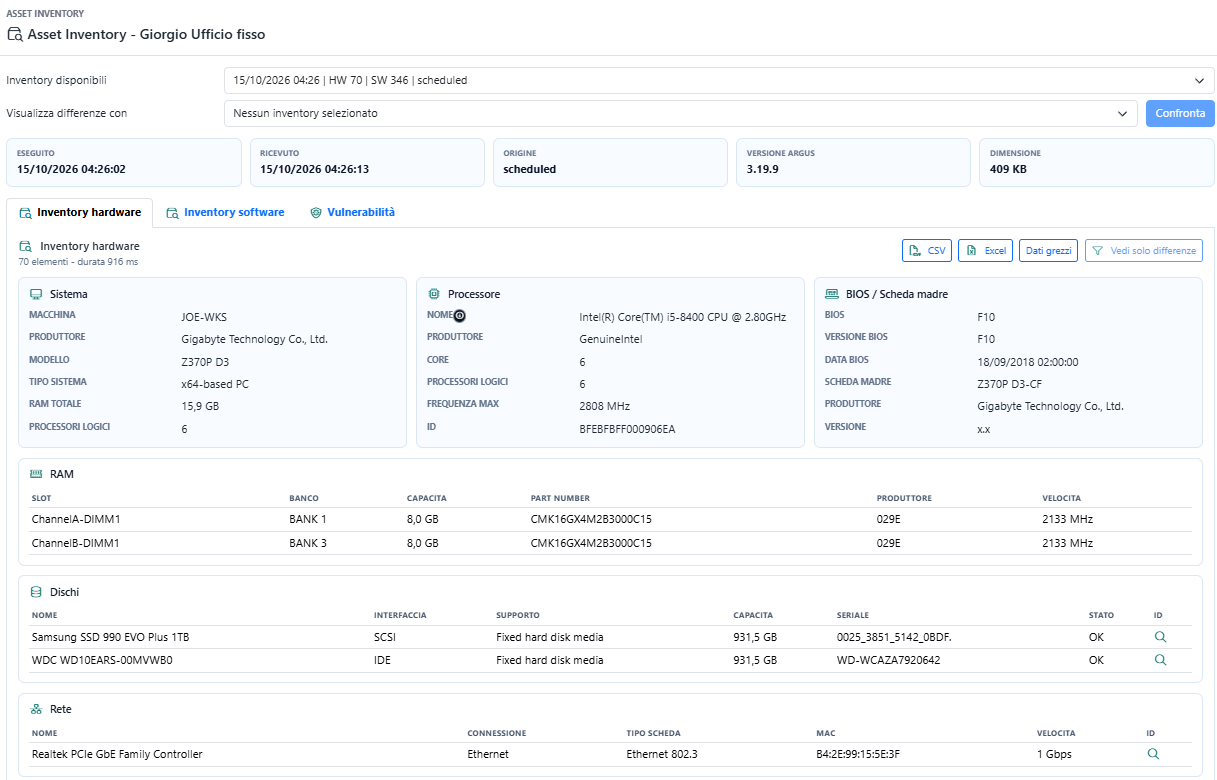
Each acquisition collects an organized technical snapshot of the hardware. Technicians quickly see system configuration, processor, BIOS and motherboard, memory, disks, network and other detected components.
- Manufacturer, model, serial numbers and technical identifiers
- Capacity, interfaces, speed and component status
- CSV and Excel export or access to raw data
- Execution and receipt dates, origin and Argus version
Software inventory
More than the program name: all the useful context.
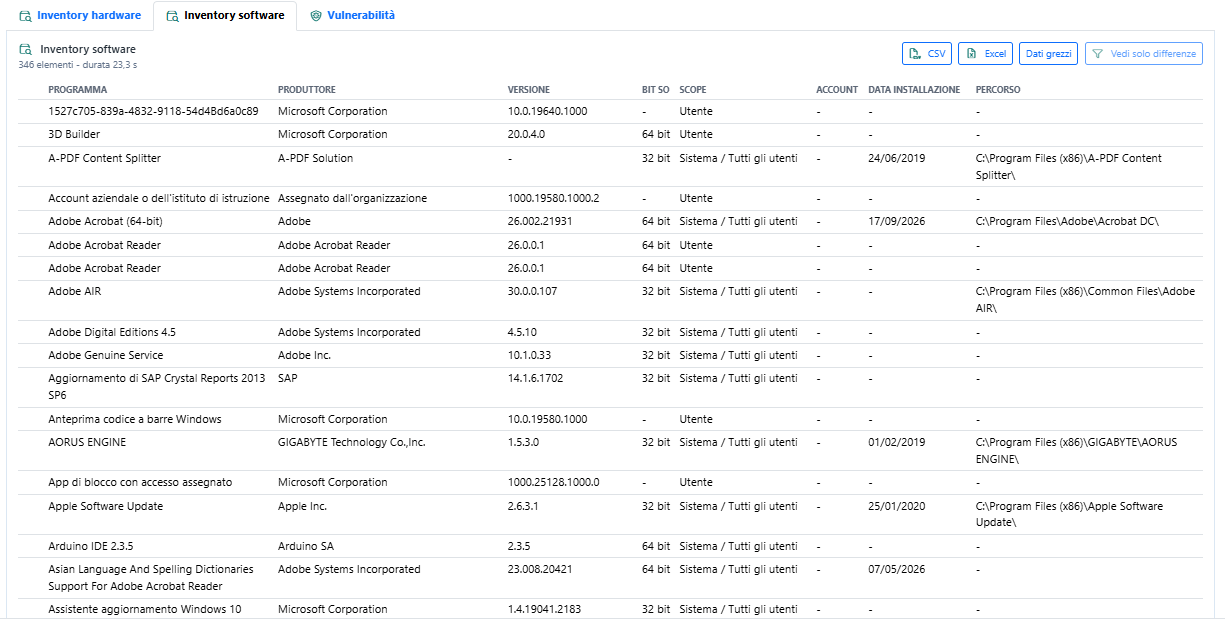
Software inventory shows application, publisher, version, architecture, installation scope, account, date and path whenever Windows provides the data.
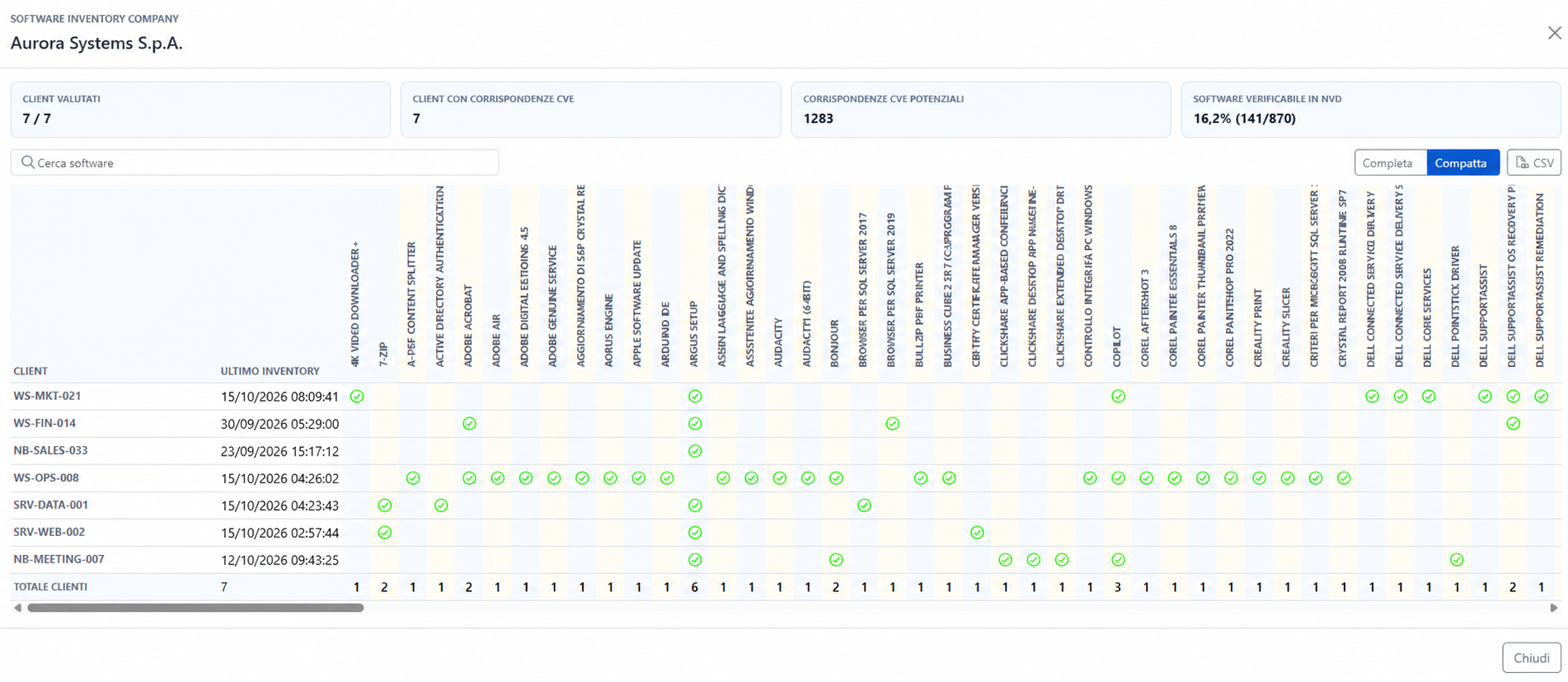
The complete view distinguishes every installation and version. The compact view groups software families to show immediately how many systems contain a product, regardless of the exact release.
- Centralized search and review for every endpoint
- Information usable for licensing, standards and updates
- Data foundation for identifying vulnerable products
Software Inventory Company
The entire company at a glance.
In addition to individual endpoint detail, Argus builds a company-wide software inventory across all systems. The matrix crosses endpoints and products to show immediately where each application is installed.
CVE vulnerabilities and Intelligence Engine
From a list of CVEs to an explanation that guides action.
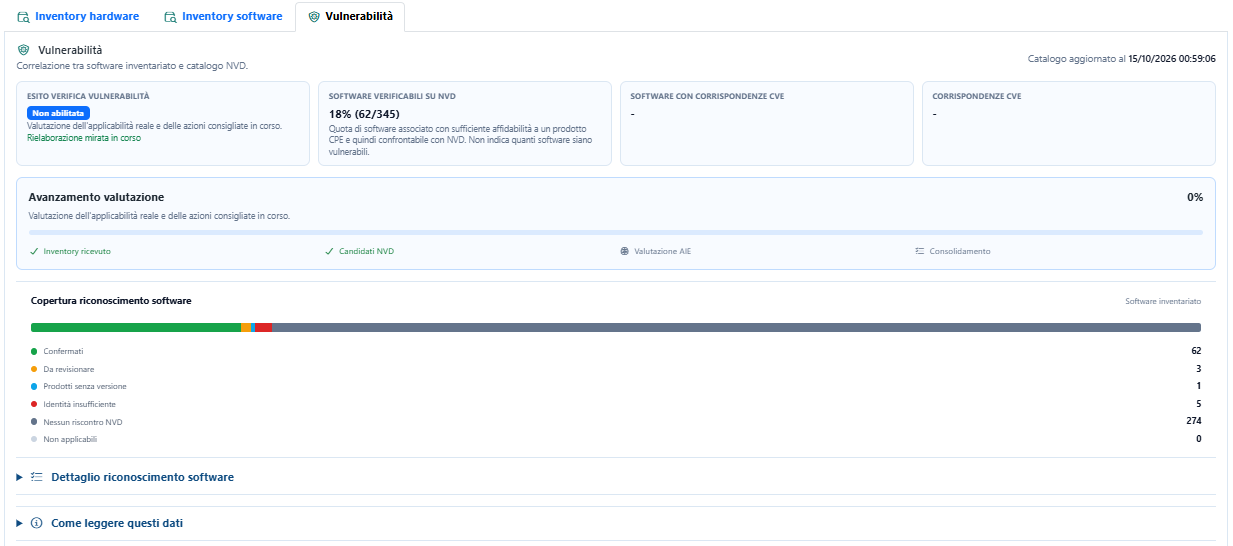
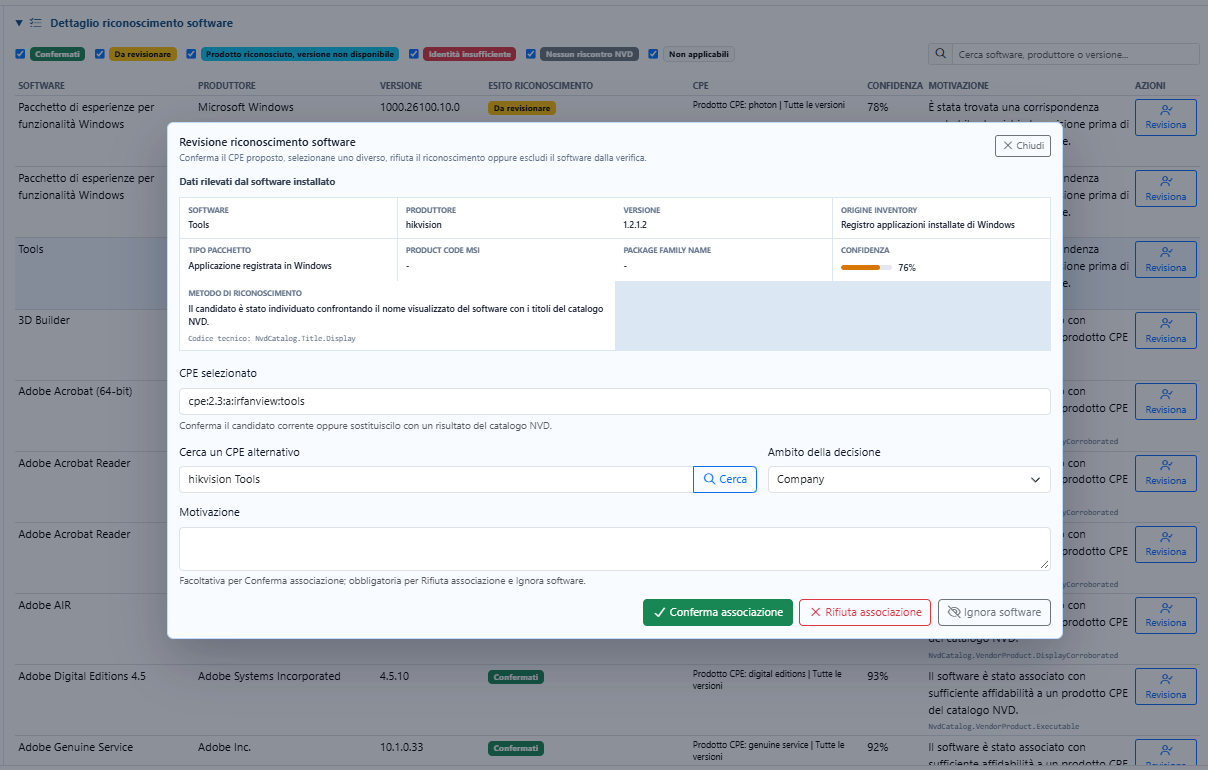
Argus correlates inventoried software with the NVD catalog and presents associated CVE vulnerabilities. Recognition coverage remains visible so technicians can distinguish confirmed matches, items requiring review and software that cannot yet be mapped reliably.
For each vulnerability, Argus Intelligence Engine can explain the issue, assess it in the system context and indicate how to resolve it or reduce exposure.
- CVEs linked to detected products and versions
- Recognition confidence and rationale
- Assisted review of the CPE association when needed
- Clear, actionable AIE guidance for technicians
Historical comparison
What changed between one scan and the next.
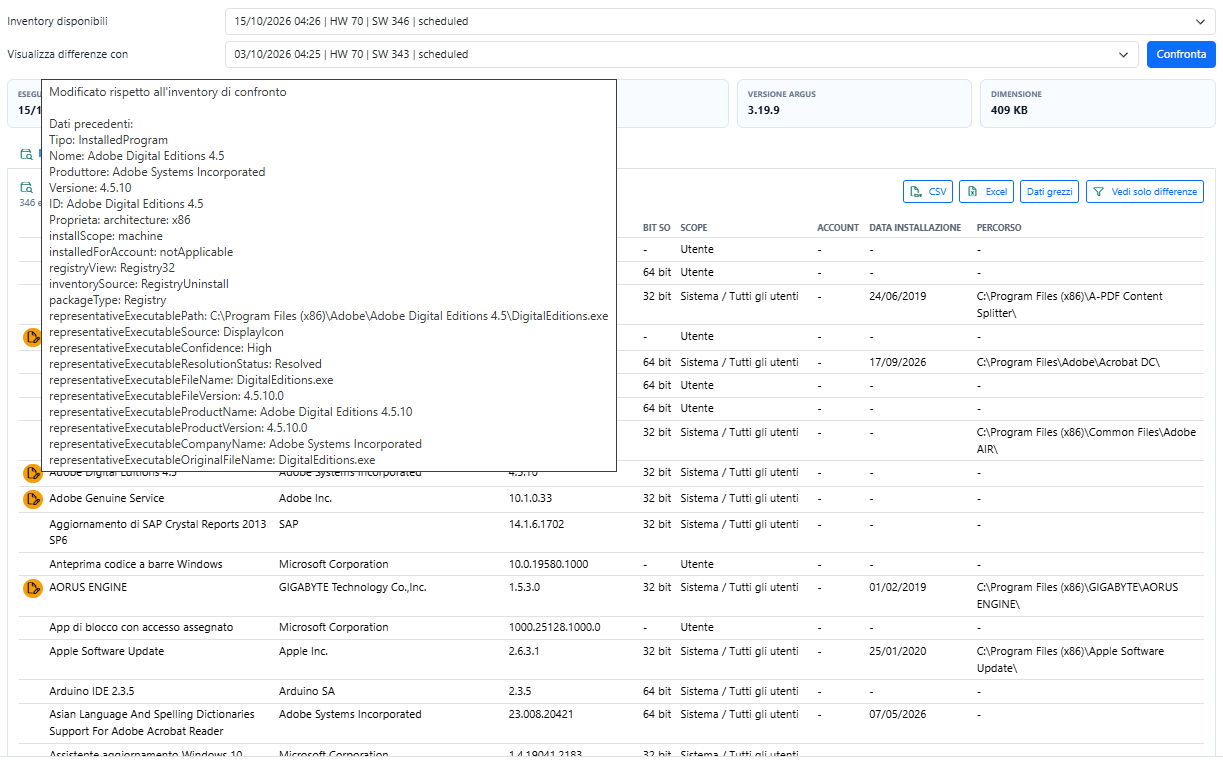
Two snapshots can be compared directly in the Monitor. Argus clearly identifies hardware and software differences, avoiding manual checks across long, difficult-to-compare lists.
- Freely select any two historical acquisitions
- Filter to show differences only
- Previous and current value details
- Traceability of installations, removals and technical changes
The result is a concrete asset history, useful for audit, diagnosis, security and configuration control.
Automatic or on demand
An up-to-date inventory without chasing systems.
Argus Client generates complete snapshots on a schedule, local request or Monitor command. Every acquisition retains its trigger, duration and capture time.
- Configurable frequency and execution days
- New acquisition available on demand from the Monitor
- Complete history, export and raw data available
- The acquisition event appears in the Timeline
The snapshot is complete. Knowledge grows in the Monitor.
Argus Client collects each complete inventory and the Monitor builds comparisons, normalization and correlations. The historical foundation remains verifiable and can be reprocessed when catalogs, criteria or operational needs change.